
Punishing the Poor: How Administrative Hubris is threatening a Lifeline for Millions at Ad-Din
- Dr Akhil Podder
The maturity and egalitarian nature of a nation’s healthcare ecosystem are not merely gauged by the clinical opulence of medical diagnostic tools or the architectural grandeur of healthcare facilities. Rather, they are profoundly reflected in the sagacity, intellectual depth, and proportionality of the decisions made by state regulators during times of systemic crisis. Recently, the tragic and deeply unexpected demise of six neonates at the Ad-Din Barrister Rafique-ul Huq Hospital in Moghbazar, Dhaka, has profoundly shaken the national conscience. The untimely demise of any child is an unmitigated tragedy, and the grief, indignation, and demand for absolute justice by the bereaved families are completely sacrosanct. However, the subsequent administrative maneuvers by the Ministry of Health, which appear geared toward a total 'shutdown' or suspension of this 700-bed, three-decade-old tertiary care charitable institution, and raise profound structural and ethical concerns. Such a draconian course of action would inevitably exacerbate Bangladesh’s already acute healthcare deficit, pushing vulnerable socio-economic demographics into a state of systemic medical disenfranchisement. It compels an objective query: why is the Minister of Health seemingly unwilling to view this incident through the objective lens of an unforeseen, systemic 'medical tragedy'? Does this zealous administrative clampdown reflect a strict adherence to the rule of law, or does it betray a deeper institutional animus fueled by subterranean corporate lobbying? A critical examination of global and domestic medical history is imperative to contextualize this crisis.

The Global Doctrine of Institutional Goodwill and Proportional Regulation
When analyzing international healthcare governance, it becomes patently evident that even the world’s most prestigious and technologically advanced clinical institutions are not entirely immune to catastrophic systemic errors, nosocomial infections, or iatrogenic mortality. However, global regulatory bodies seldom resort to the absolute closure of a tertiary facility. Instead, they operate under the doctrine of preserving institutional 'goodwill'—a form of intangible, societal capital painstakingly amassed over decades. For instance, the United States’ premier clinical and research institutions, such as the Johns Hopkins Hospital and the Mayo Clinic, have historically navigated profound crises involving systemic clinical failures and sudden outbreaks of healthcare-associated infections (HAIs). According to landmark epidemiological studies published in The British Medical Journal (BMJ), nosocomial infections and clinical errors remain a leading cause of involuntary mortality even in highly regulated Western jurisdictions. In 1999, the landmark report by the U.S. Institute of Medicine (IOM), titled "To Err is Human: Building a Safer Health System", revealed that between 44,000 and 98,000 Americans die annually due to preventable medical errors in hospitals. Yet, the United States Department of Health and Human Services or state medical boards have never rescinded the operating licenses of institutions like Johns Hopkins or Mayo Clinic, nor have they ordered their total closure. The standard global protocol dictates an immediate, targeted epidemiological isolation of the affected clinical wards, comprehensive sterilization, rigorous root-cause analysis, and systemic protocol reform. Regulators recognize that the arbitrary dismantling of a major healthcare pillar inflicts far greater net harm on public health than the localized error itself.
Similarly, in neighboring India, premier tertiary care networks such as Apollo Hospitals and Fortis Healthcare have historically faced intense scrutiny over allegations of clinical negligence, institutional malpractice, and even organ transplantation irregularities. The Supreme Court of India, in various landmark adjudications (such as Paschim Banga Khet Mazdoor Samity v. State of West Bengal, 1996), has consistently penalised institutional negligence through substantial compensatory fines and the suspension of individual clinical licenses. Crucially, however, neither the judiciary nor the Ministry of Health and Family Welfare has ever sanctioned the absolute shutdown of a 700- or 1000-bed running hospital. The preservation of institutional infrastructure and the fundamental right to healthcare of millions of innocent patients have invariably taken precedence over administrative retributive measures.
Domestic Precedents and the Paradox of Selective Enforcement
Turning the lens toward Bangladesh's domestic healthcare history reveals a striking paradox of selective regulatory enforcement. Top-tier public healthcare institutions, including Dhaka Medical College Hospital (DMCH), Sir Salimullah Medical College (Mitford) Hospital, and Shaheed Suhrawardy Medical College Hospital, frequently register incidents of alleged medical negligence, neonatal mortality due to sudden oxygen supply disruptions, and instances of physical altercations involving intern physicians and patients' relatives or media professionals.
Historically, Mitford Hospital has faced severe public and regulatory scrutiny over controversies regarding counterfeit pharmaceutical distribution and localized outbreaks of refractory nosocomial infections. Similarly, Chittagong Medical College Hospital (CMCH) has documented tragic fatalities directly linked to mechanical and electrical failures within its Intensive Care Units (ICUs). Yet, the executive branch of the state has never contemplated the closure of DMCH or Mitford Hospital. The state correctly recognizes that suspending public clinical operations would immediately condemn thousands of impoverished citizens to marginalization and preventable death. Why, then, is a fundamentally different, retributive doctrine being applied to Ad-Din Hospital—a private, non-profit institution? Structurally and functionally, Ad-Din operates as a vital parallel to public healthcare, serving as a critical lifeline where thousands of underprivileged and lower-middle-class citizens receive high-quality, subsidized, or entirely free life-saving interventions daily.
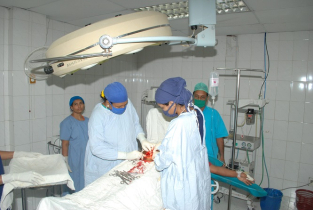
Established in 1997, Ad-Din Hospital has earned immense institutional goodwill by offering affordable, premium-quality clinical care, earning the moniker of 'The People's Sanctuary.' Out of its 700-bed capacity, 300 beds are permanently reserved for entirely free treatment for impoverished and destitute patients, including the absolute waiver of accommodation and dietary fees. Furthermore, approximately 3 percent of the total neonatal deliveries in the capital city of Dhaka are conducted safely within this single institution. This extraordinary empirical footprint demonstrates that Ad-Din’s institutional goodwill is an indispensable public asset. While the recent neonatal mortality is an unmitigated tragedy, the institution’s response under its director, Dr. Sheikh Mahiuddin—a highly respected, philanthropic, and strictly apolitical physician—has been remarkably transparent and accountable. Rather than adopting an adversarial corporate stance, Dr. Mahiuddin publicly acknowledged the systemic failure, extended profound institutional empathy and substantial financial restitution to the bereaved families, and initiated stringent internal disciplinary actions against the responsible clinical staff. Concurrently, following a deeply regrettable altercation involving low-level cleaning staff and media personnel, the management immediately terminated the rogue employees. For an institution operating under strict adherence to state regulatory frameworks to exhibit such profound accountability, it deserves state-guided reformative assistance, not bureaucratic annihilation.
The Undercurrents of Corporate Animus and Public Trust
The fierce bureaucratic eagerness to shut down Ad-din Hospital raises legitimate public suspicion regarding the undercurrents of corporate animus and predatory market dynamics. In Dhaka, the private healthcare sector has increasingly shifted toward aggressive, profit-driven corporatization. The exorbitant, five-star billing structures of elite private hospitals have effectively commodified healthcare, leaving it inaccessible to the masses. Within this hyper-commercialized landscape, Ad-Din Hospital stands as a disruptive ethical anomaly. By empirically proving that international-standard Neonatal Intensive Care Unit (NICU) services, maternal care, and complex surgical procedures can be successfully delivered at a fraction of commercial costs, Ad-Din has consistently challenged the monopolistic pricing models of profit-maximizing corporate healthcare conglomerates.
Consequently, Ad-Din’s stellar reputation and massive patient influx have long been a source of commercial discomfort for corporate healthcare cartels. The current neonatal tragedy appears to have been weaponised by these vested commercial lobbies to dismantle a major non-profit competitor. Orchestrating the closure of Ad-Din would immediately force its vast patient demographic to seek care at expensive, commercial facilities, effectively transforming a public health tragedy into a corporate windfall.
However, the ultimate victims of this administrative overreach will be the ordinary, hard-working citizens of Bangladesh. The empirical reality of the past few days provides a resounding verdict: despite intense negative media coverage, the public trust in Ad-Din remains completely unshaken. In the last 24 hours alone, the outpatient department (OPD) catered to 1,039 patients, with 71 new indoor admissions recorded—representing a geometric progression in patient volume. This spontaneous influx of families from far-flung districts like Lakshmipur, Gazipur, Narsingdi, Comilla, and Brahmanbaria demonstrates that the populace fundamentally discerns the institutional integrity of Ad-Din.
Conclusion
In a constitutional democracy, the regulatory mechanisms of the state must be driven by the clinical rule of law and public welfare, rather than corporate hostility or administrative petulance. Dismantling a 700-bed hospital over localized operational failures is an anti-people measure that Bangladesh’s overburdened public health infrastructure cannot sustain. The Ministry of Health must rise above selective enforcement and align its actions with global best practices. Ad-Din Hospital should be given the necessary regulatory space to implement rigorous protocol audits, enhance its epidemiological surveillance, and rectify its institutional vulnerabilities under strict state supervision. Preserving Ad-Din is not merely about protecting a private entity; it is about safeguarding the fundamental right to health of millions of marginalized citizens and ensuring that the smile of a healthy child remains accessible to all, regardless of economic privilege.
[Dr. Akhil Podder, Former Chief News Editor, Ekushey Television-ETV]